
by Katie Strength
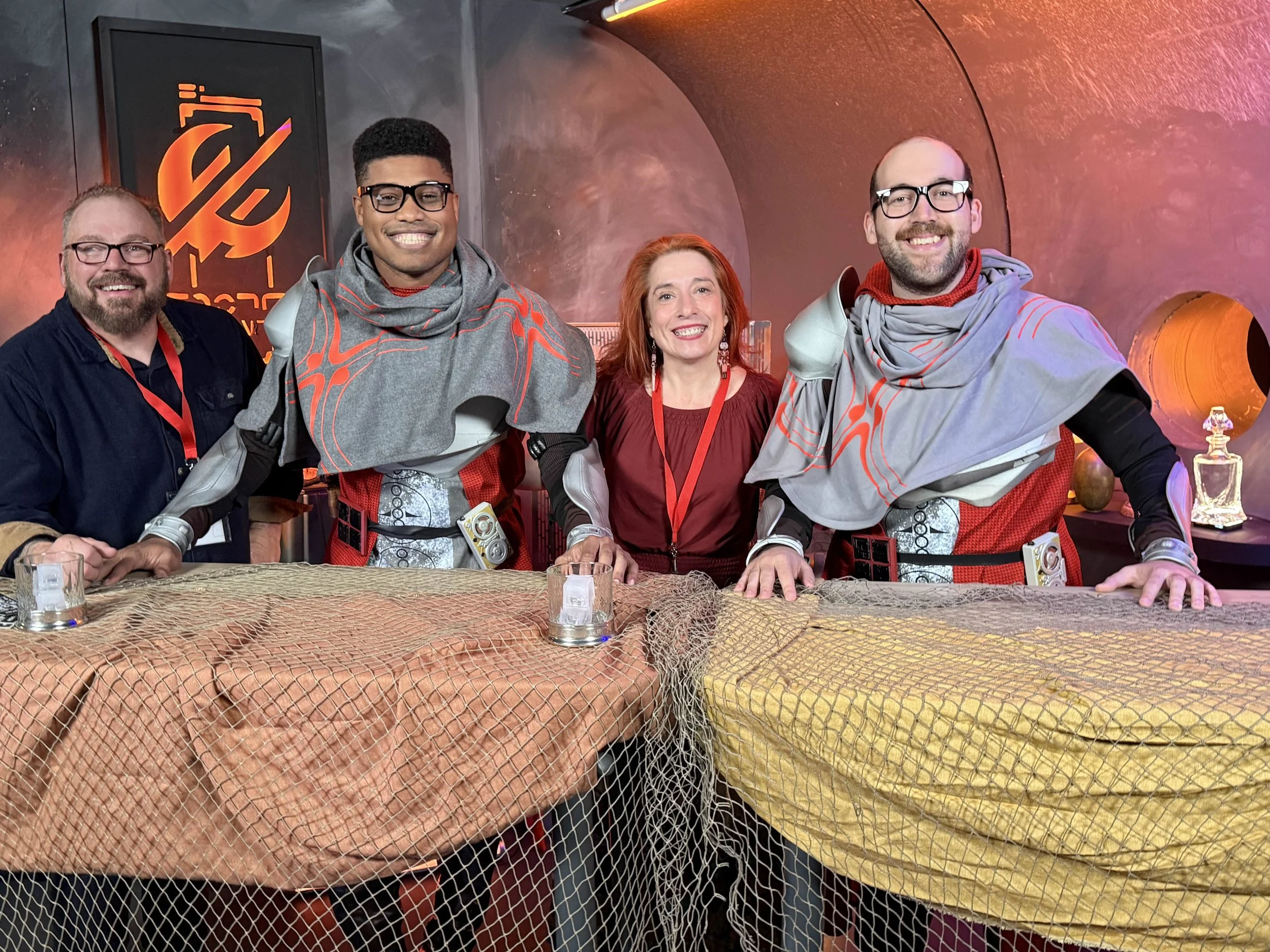
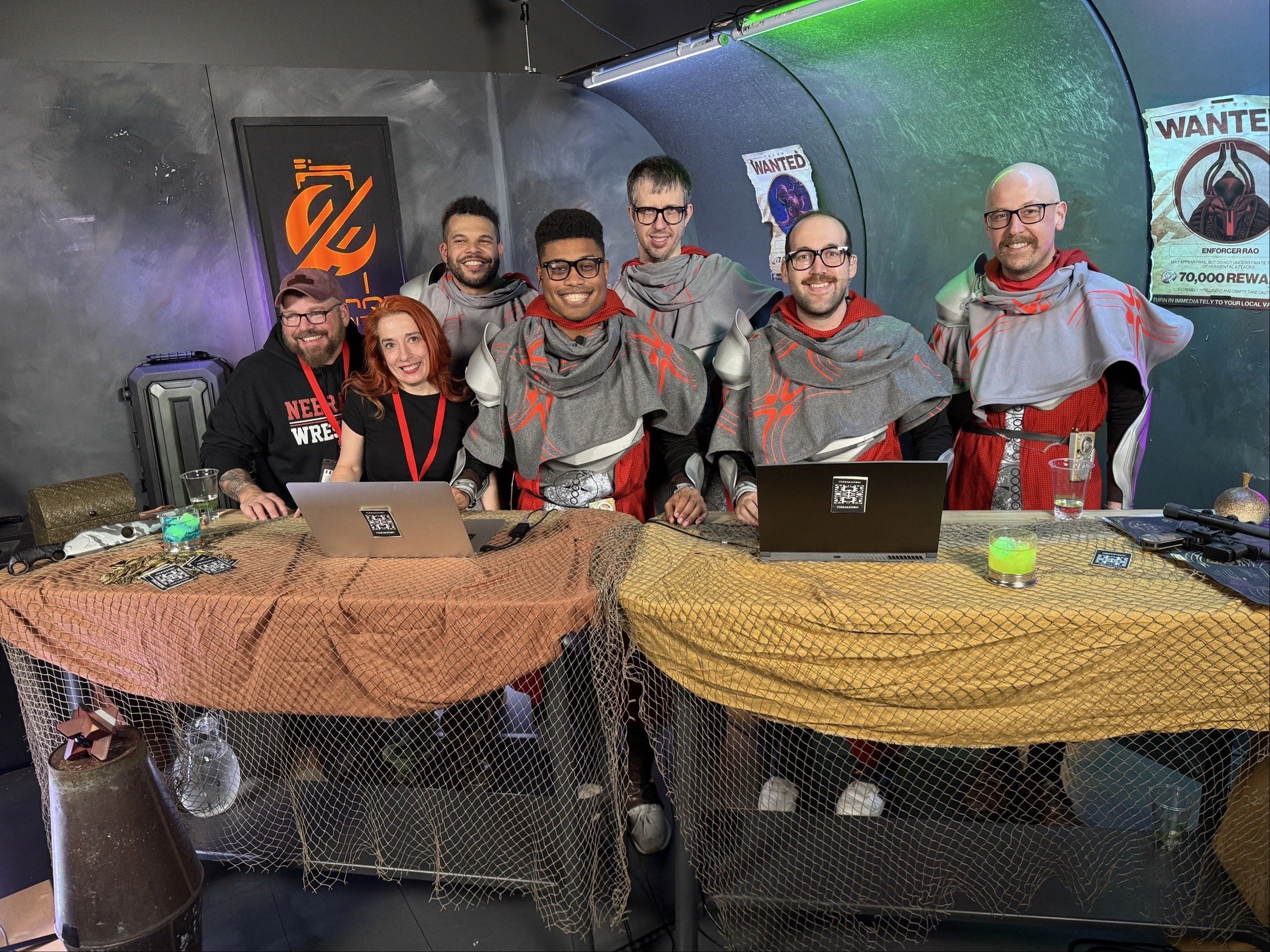
There is something quietly intimidating about being asked to bring a character to life who has only ever existed in pixels.
In a video game, a character never has to sit down.
They never have to shift their weight.
They never feel gravity, heat, friction, or fatigue.
They also never complain when something digs into their collarbone.
Or need snack breaks.
Or email you later to say, “Hey… this thing slowly tried to assassinate my shoulder.”
Real people do.
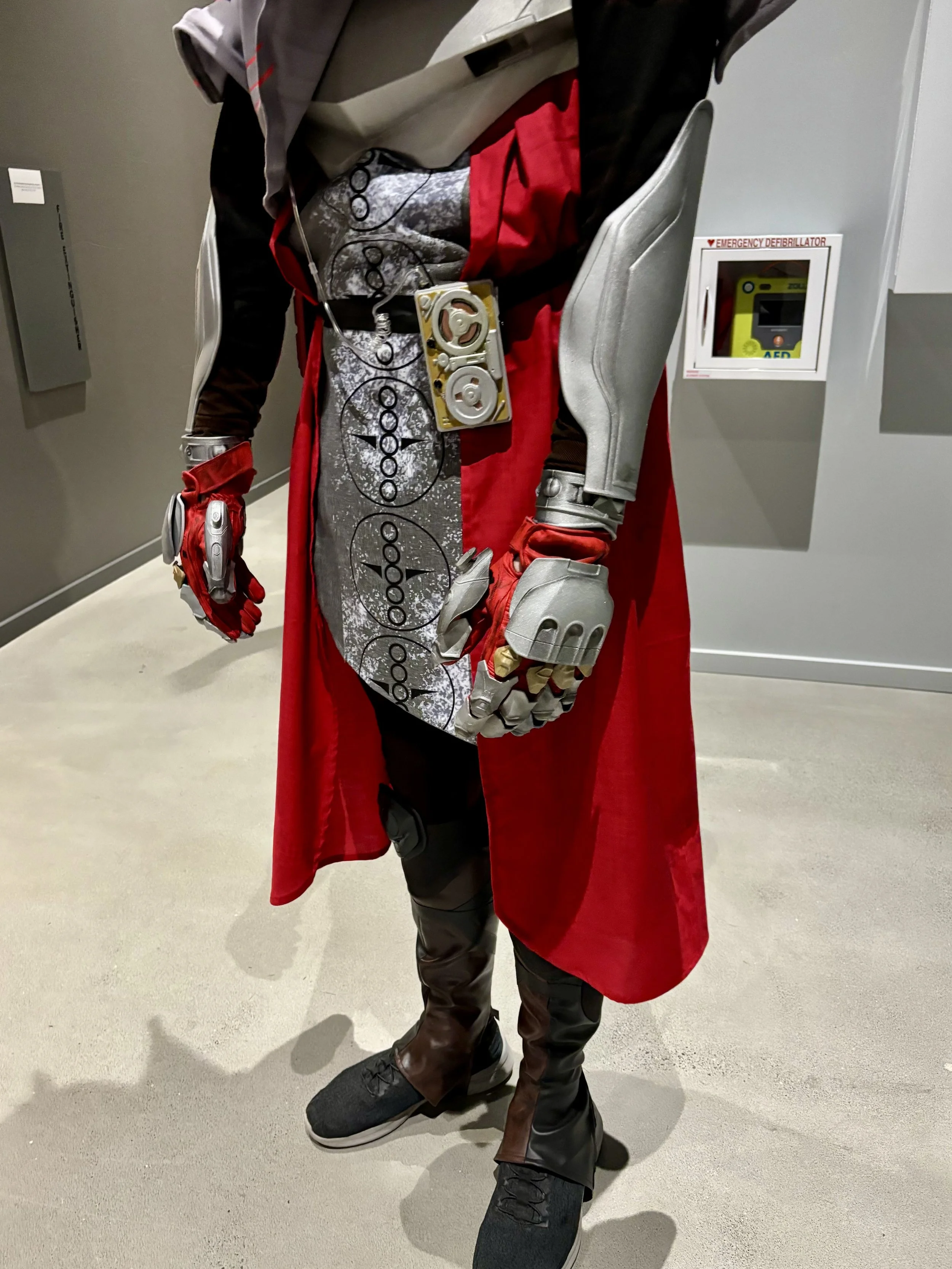
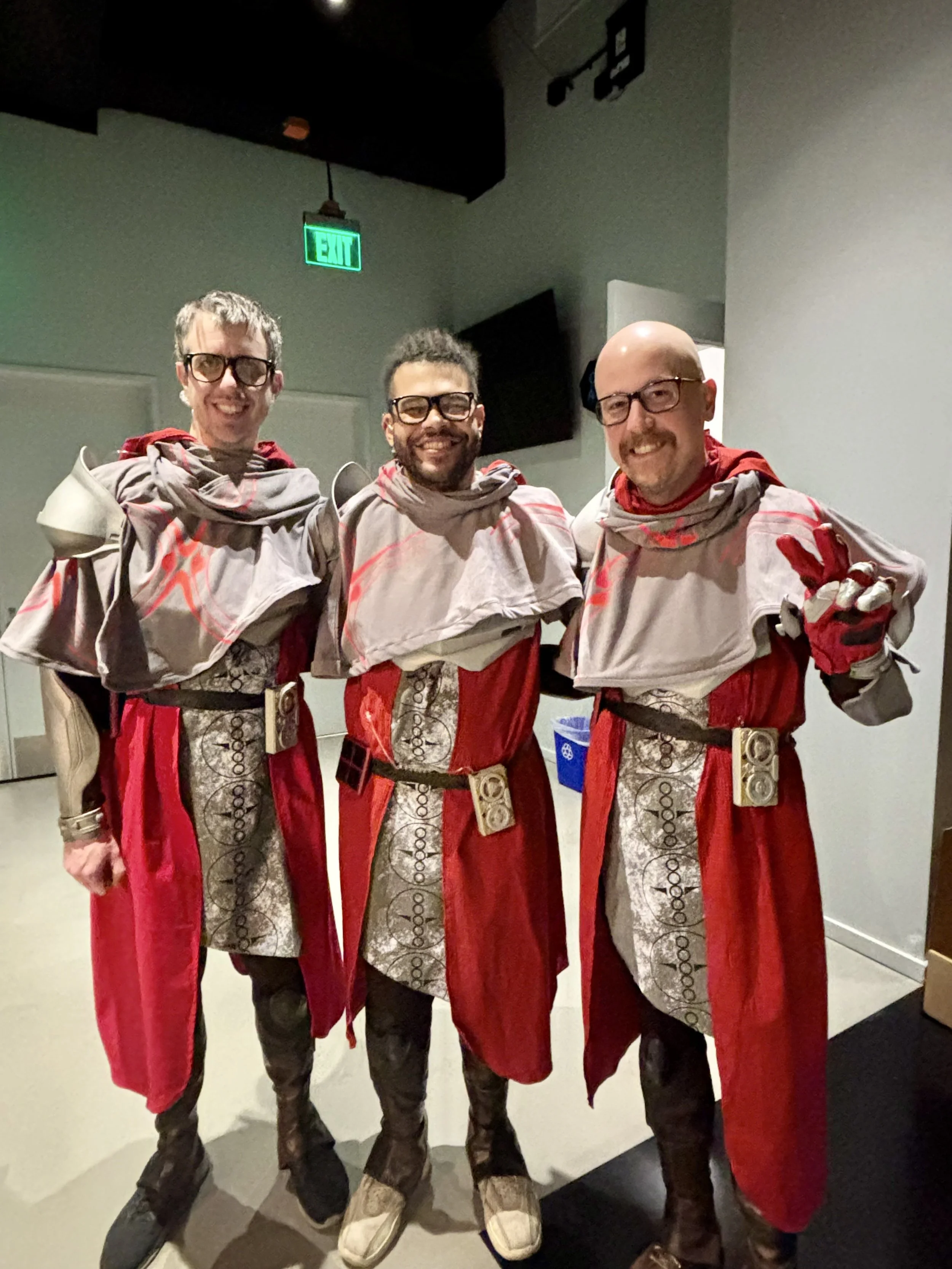
That was the challenge when we were commissioned to create these costumes for a studio activation with Bungie. From the beginning, we knew this work would demand more than accuracy. It would require translation — and a lot of listening.
Making the Invisible Tangible
Digital characters are designed for impact at a distance. Their silhouettes are bold. Their details are intentional. But what works beautifully on a screen doesn’t always work on a body.
A digital shoulder piece can float impossibly high.
A garment can drape in ways fabric never actually would.
Hard surfaces can intersect without consequence.
In theory, everything fits perfectly.
In practice, gravity always has opinions.
Our job was to ask harder questions.
What happens when this piece moves?
What supports it?
Where does it rest?
How does it behave when the body beneath it breathes, turns, leans forward, or relaxes?
Every answer shaped the structure of the build.
Building the Soft World First
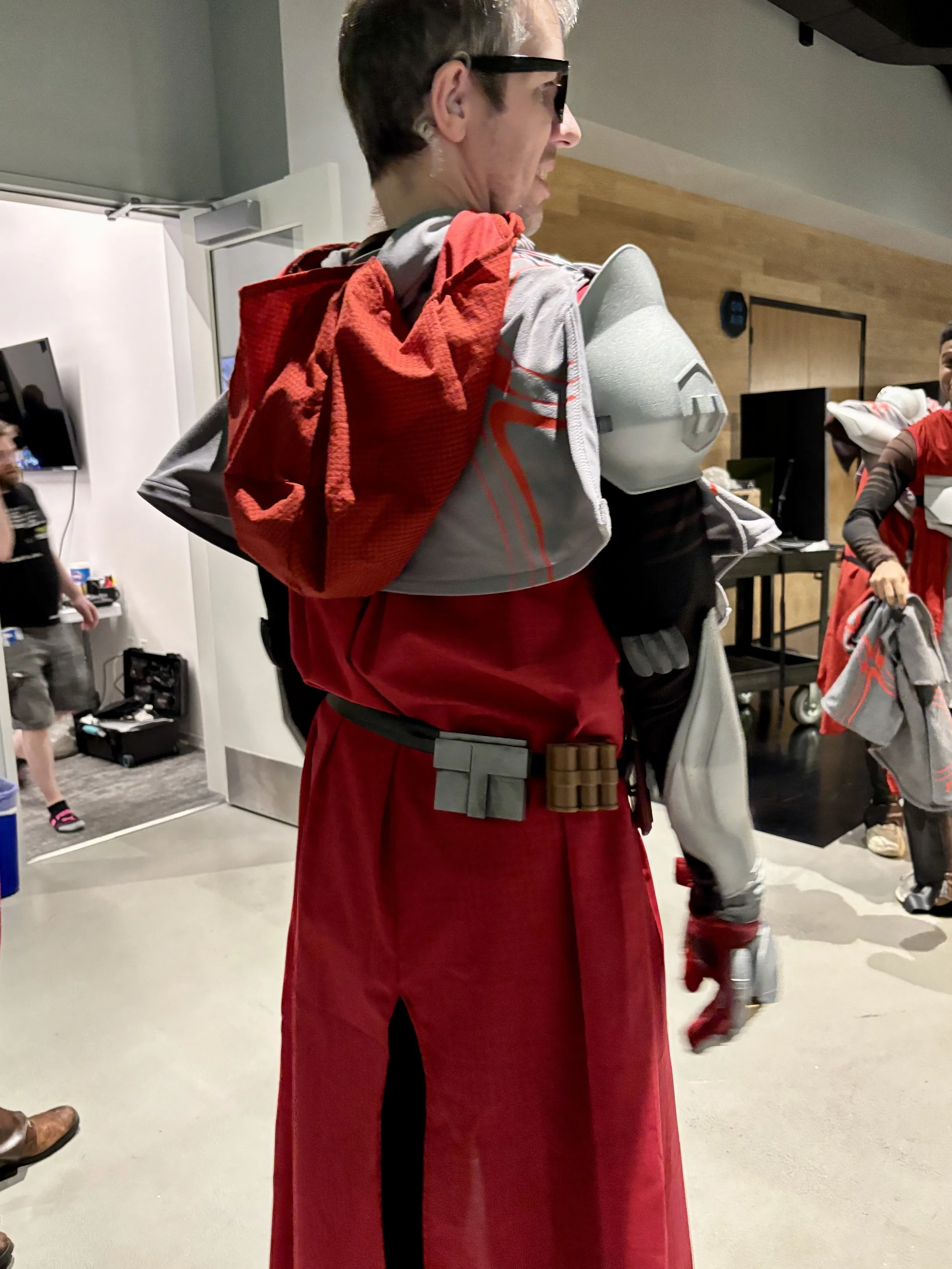
For me, the soft goods were the emotional foundation of these costumes.
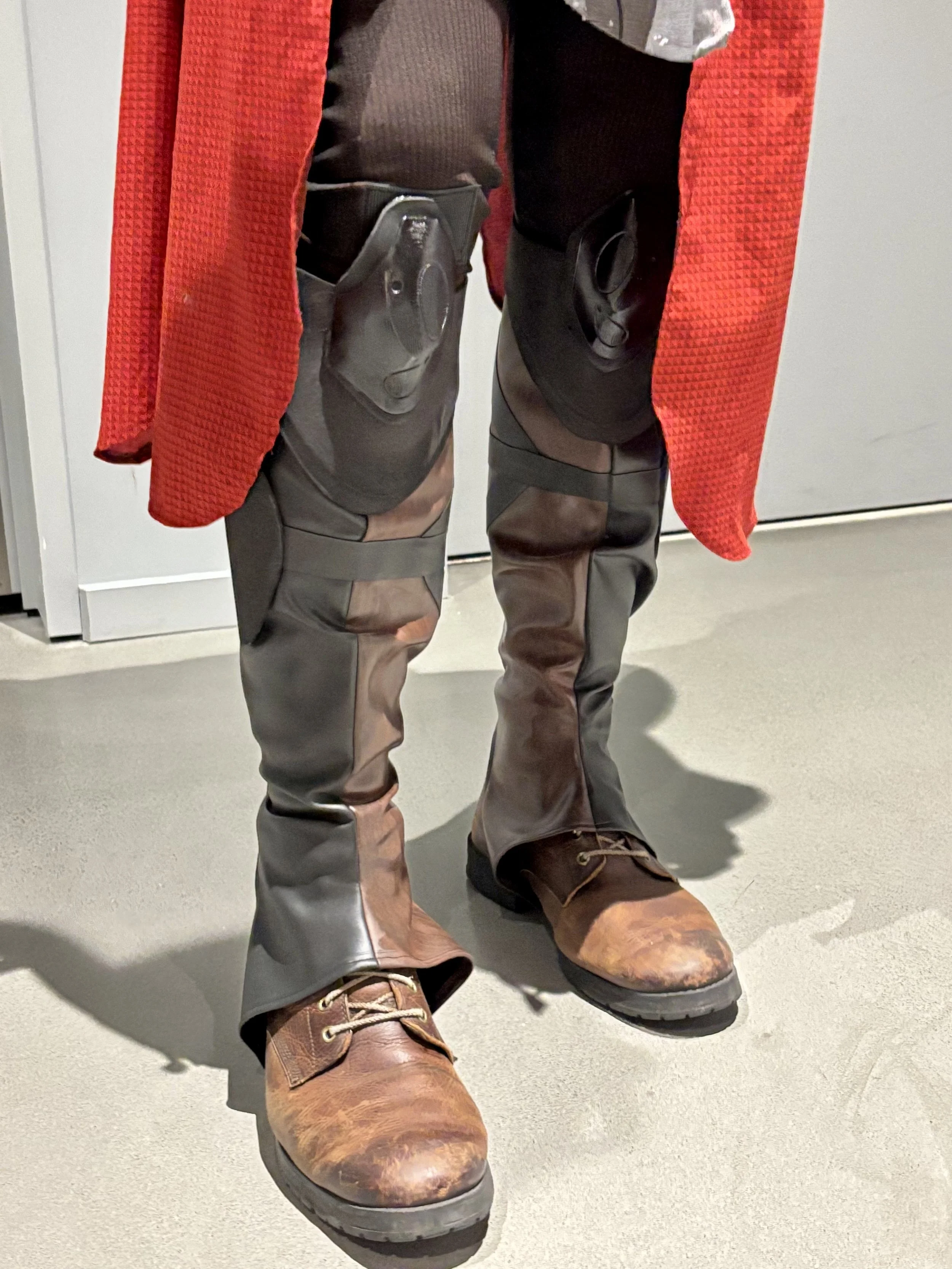
Fabric choice wasn’t about color alone — it was about weight, recovery, and how the material responded over hours of wear. Patterning had to honor the original forms while accommodating posture and movement that no digital model ever needs to consider.
Each panel, seam, and layer was designed to support the body inside the costume, not fight it. The garments needed to hold their shape while still yielding to natural motion — especially in a studio environment where sitting, standing, turning, and gesturing all happen continuously.
The goal was never stiffness.
The goal was confidence.
When a costume fits correctly, the wearer forgets about it — which is always the best compliment.
Structure, Surface, and the Work You Don’t See
What made this build truly come alive was the conversation between soft goods and structure — and that conversation happens through partnership.
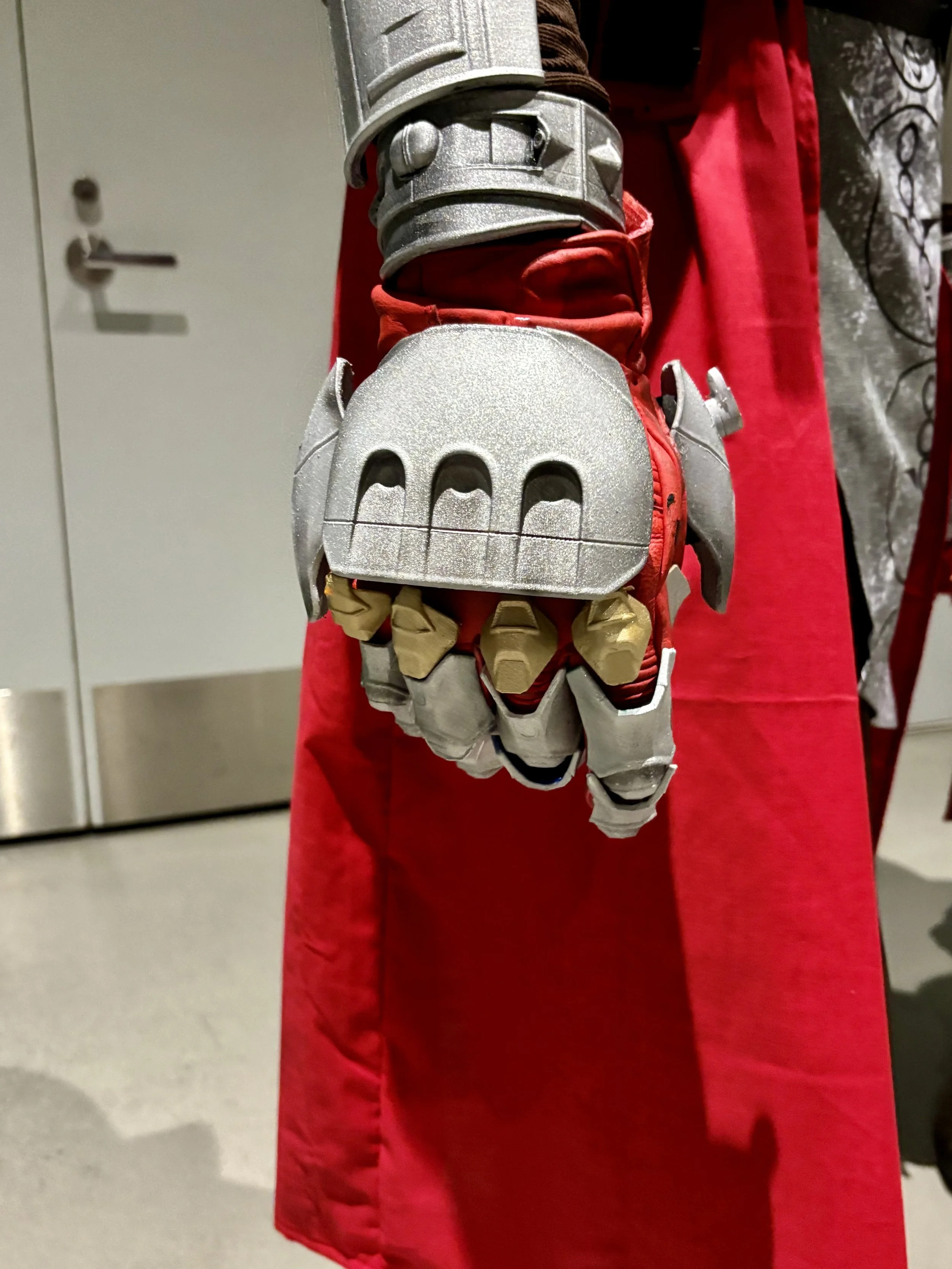
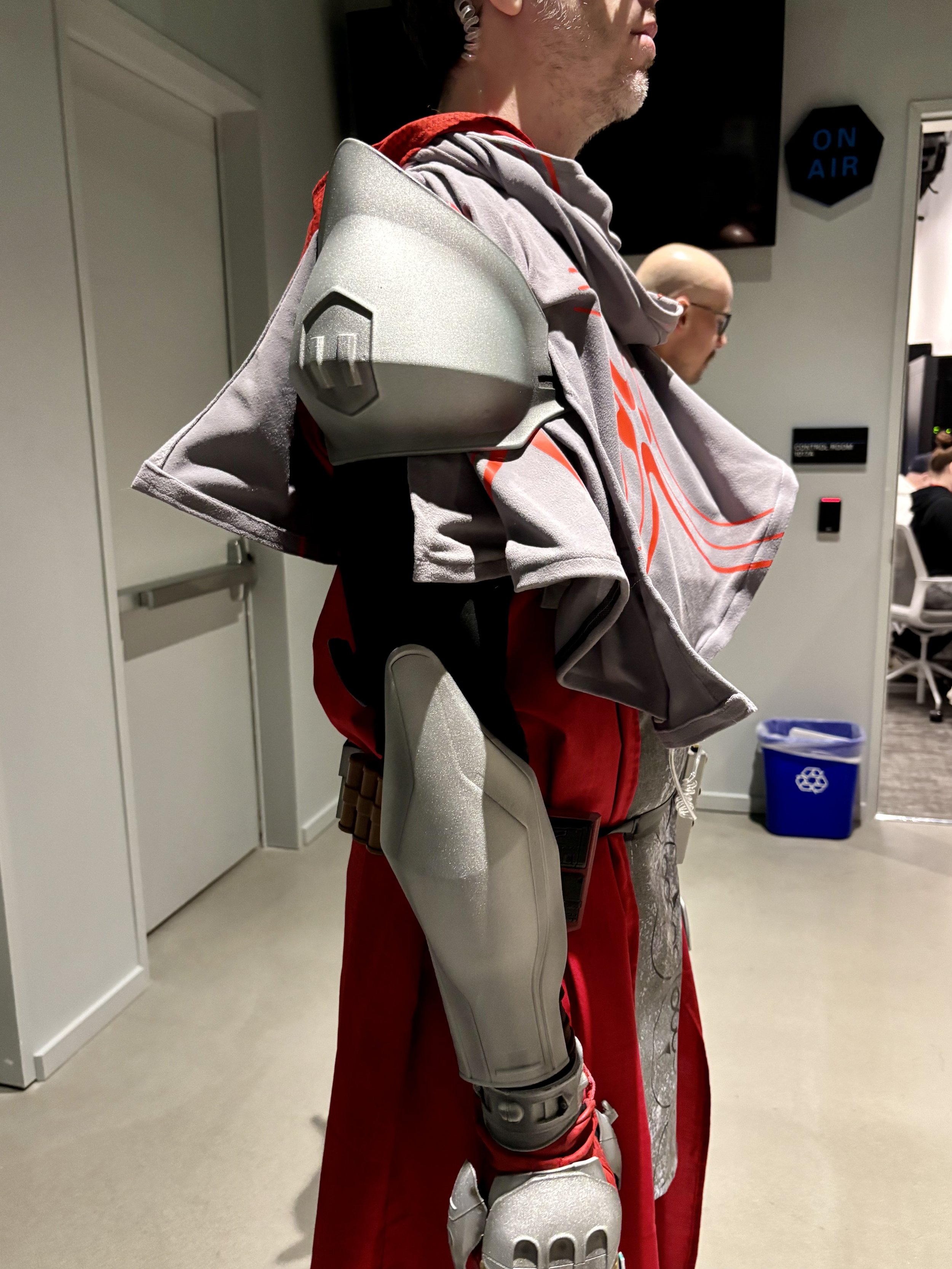
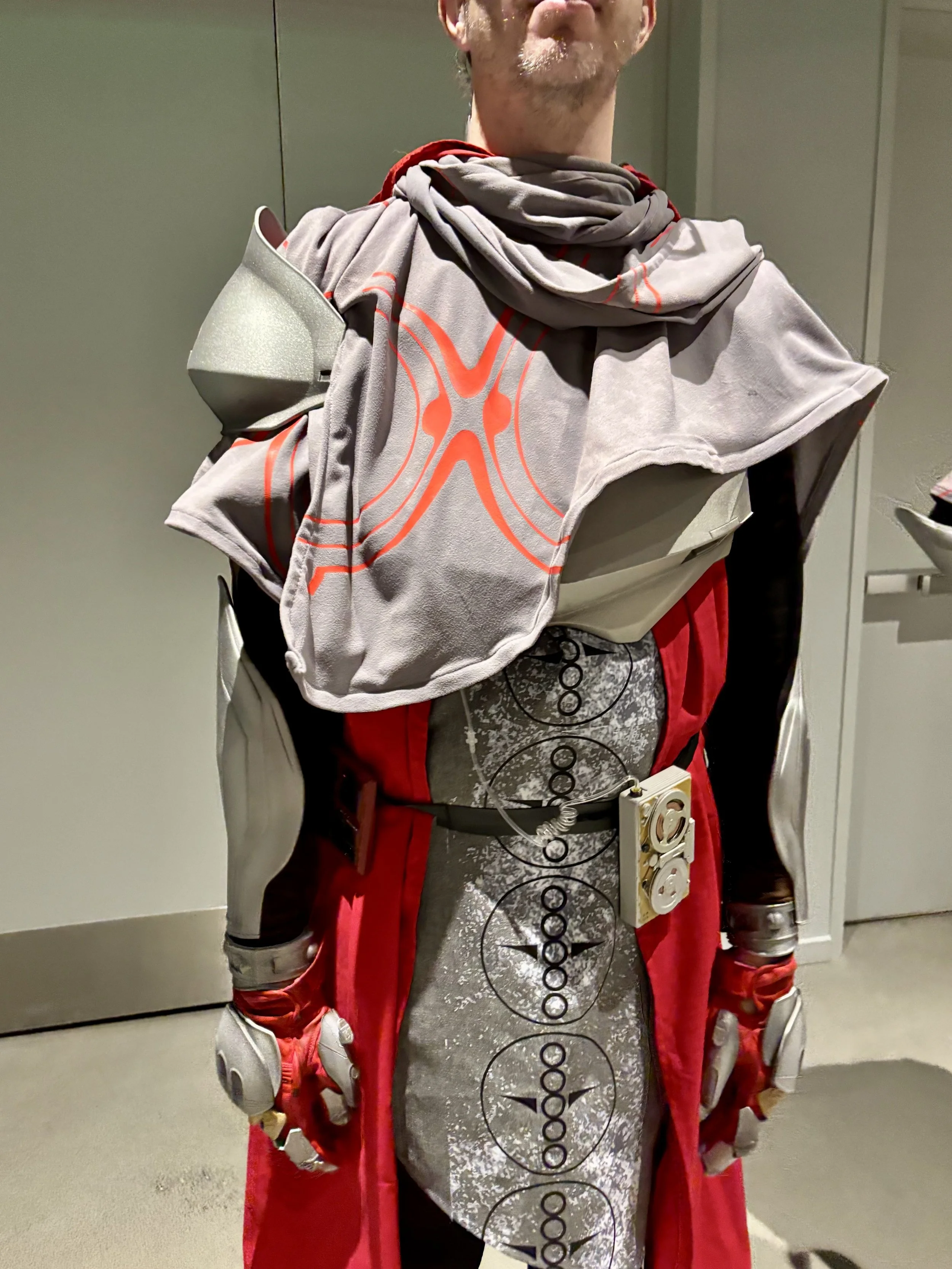
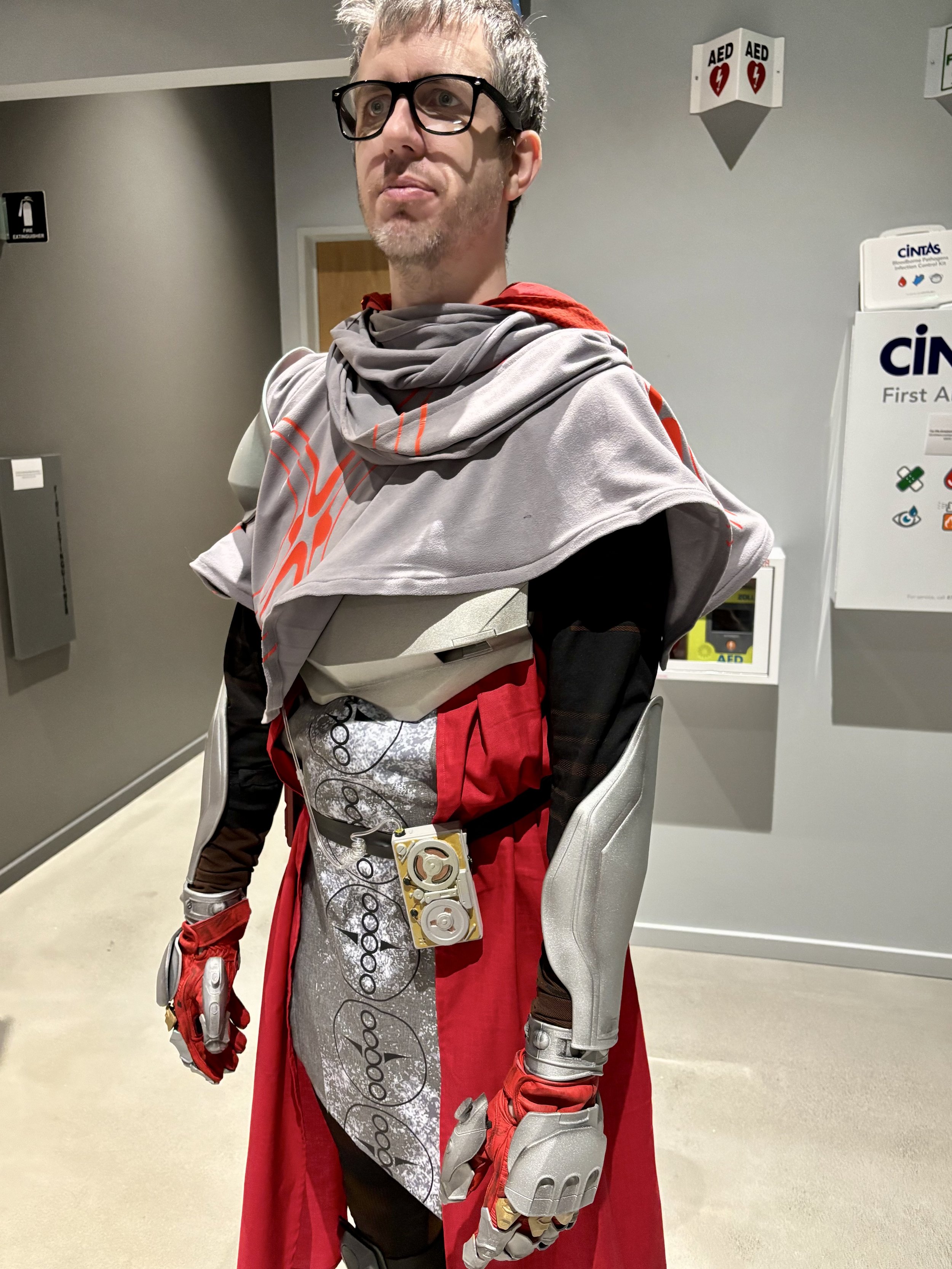
Todd handled all of the 3D work for these costumes: modeling, printing, finishing, painting, and final integration. Every hard element began as a digital form that had to be reimagined for physical reality — not just visually, but structurally.
Armor pieces needed internal logic.
Weight had to be distributed, not concentrated.
Edges had to read cleanly on camera while remaining comfortable against the body.
He also created and applied all of the digital transfer artwork, ensuring graphic details translated crisply and consistently from reference to final form. Those details are deceptively complex — they have to align perfectly, endure wear, and still feel like they belong to the world they came from.
One of the things I’ve learned after seven years of building together is that Todd never overbuilds just to impress. He builds with restraint, intention, and a deep respect for the body inside the work — which, frankly, is rarer than people realize.
If he says, “I think we can make this lighter,” it usually means he already has a solution — he’s just inviting me into the conversation. And honestly, that kind of quiet confidence makes collaboration feel easy — which is a gift, especially when the work gets complicated.
That level of integration doesn’t happen by accident. It comes from shared language, trust, and a lot of builds behind us.
When a Costume Starts to Breathe
There’s always a moment when a costume stops feeling like a collection of parts and starts feeling like a presence.
For these builds, that moment came when we saw them in use — worn comfortably, moving naturally, existing easily in the studio environment they were designed for. Nothing pulled focus. Nothing demanded attention. The work supported the people wearing it instead of competing with them.
That’s when something digital becomes alive.
Usually that moment is followed by a long pause, a shared look, and one of us quietly saying, “Okay… yeah. There it is.”
Why This Work Matters to Me
At OuterRim, we don’t believe costumes exist in isolation. They exist in context — in story, in performance, and in the environment they’re meant to live in.
This project reminded me why our creative partnership sits at the center of everything we do. When tailoring, structure, surface, and story are developed together — not in sequence, but in conversation — the result feels inevitable. Natural. Real.
I’m proud of this build not just because of how it looks, but because of how it lives.
More detailed breakdowns of individual elements are coming soon. For now, I’m grateful for the opportunity to help a digital world step into reality — and for the partnership that makes work like this possible.
— Katie
