
Outer Limits
Outer Limits explores story, fandom, and the creative philosophy behind OuterRim Creatives — the why that drives what we build and why it matters.
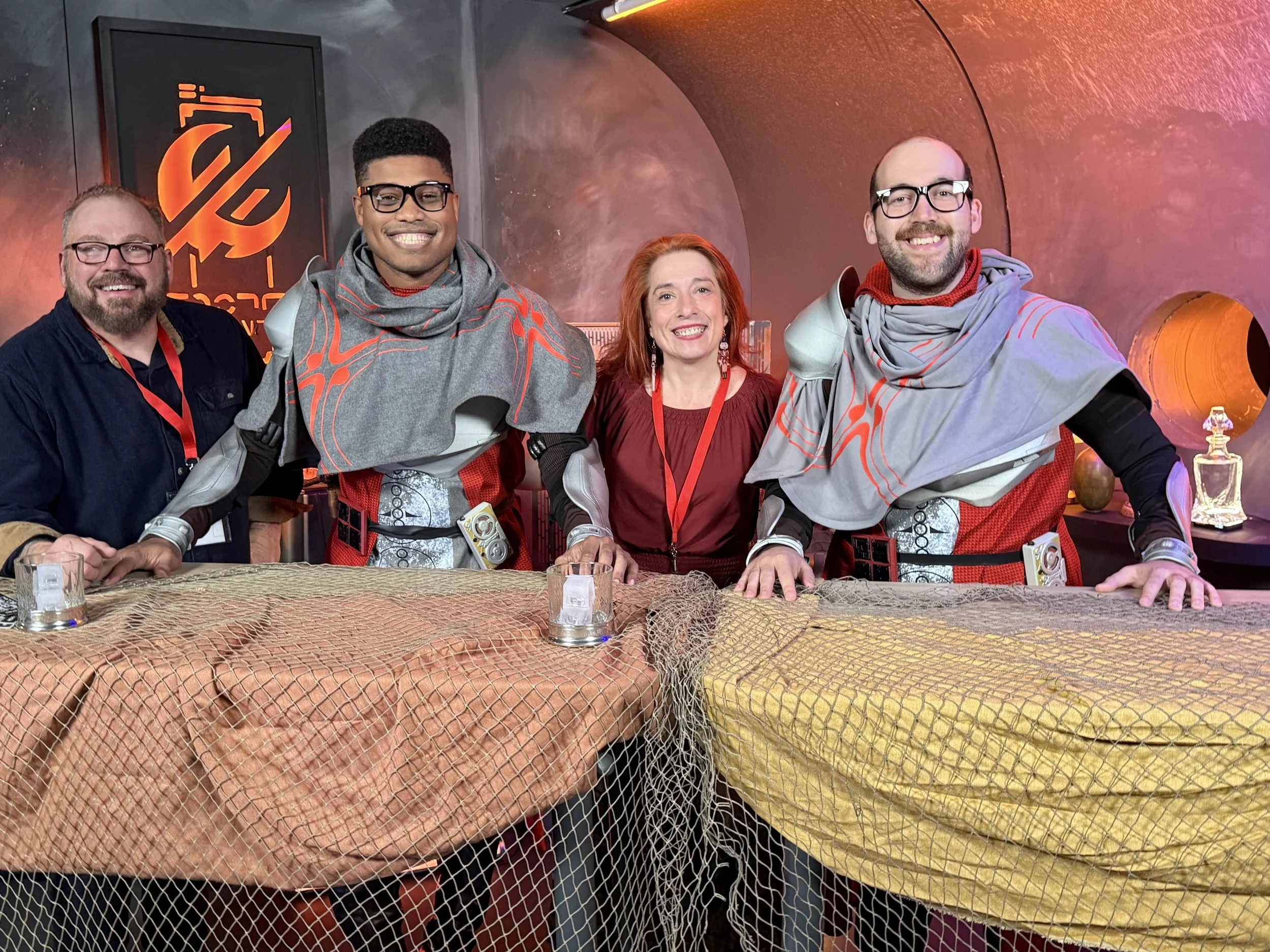
Making LODI Real: Wearability, Worldbuilding, and the Stories We Carry
What does it mean to take a character built from light, mythology, and code—and ask it to live in the real world? Working with Bungie to bring LODI from Destiny 2 into wearable reality challenged everything we believe about story, embodiment, and craft. This is why Katie and I do what we do—and why wearability is where a story truly comes alive.
One of the things that has always drawn us to Bungie is the worlds they create — not just the stories they tell, but the seriousness with which they take the act of worldbuilding itself.
There’s a difference between building a setting and building a world.
A setting can be passed through.
A world asks you to stay.
That kind of worldbuilding stays with you. It isn’t wallpaper. It isn’t something you skim past on your way to the next objective. It’s the kind that makes you want to meet it where it lives.
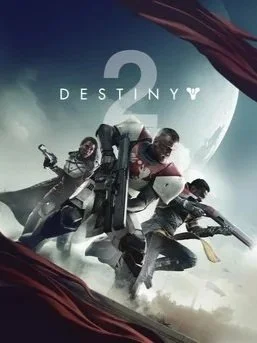
The world of Destiny 2 takes its own mythology seriously. Not as trivia meant to reward only the most obsessive fans, but as foundation. Characters exist because the world demands them. Their armor, their posture, their silhouettes feel like responses to history, conflict, belief — evidence of a life lived before you encountered them, and one that will continue whether you’re watching or not.
That kind of intentionality matters to us.
It’s rare.
Worldbuilding That Asks You to Stay
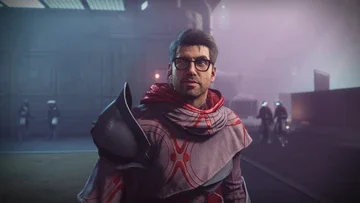
When Bungie reached out and asked us to translate a character like LODI into the physical world, the question was never How do we recreate a look? It was always How do we honor a world that already knows who this character is?
Video game characters begin their lives as abstractions.
They’re built from polygons, shaders, and light.
They obey rules that don’t apply to bodies — gravity is optional, materials are idealized, and nothing ever pinches or pulls unless it’s been animated to do so.
But the moment you decide to bring a character out of that space and into the real world, everything changes.
Suddenly, the character has to submit to reality.
To weight.
To balance.
To breath.
To the way a human body actually occupies space.
That transition — from digital certainty to physical limitation — is where translations either collapse… or deepen.
Honoring a World, Not Just a Look
There was a moment during the process when the character was technically “done.” Everything was present. Every element accounted for. And yet, something still felt unresolved.
Katie stood there for a long time without saying anything. Then she adjusted a single line — barely noticeable — and stepped back. The character didn’t look different in any obvious way. But the posture changed. The presence changed.
That was the moment LODI stopped feeling assembled and started feeling inhabited.
The Moment a Character Becomes Inhabited
This is where wearability stops being a technical concern and becomes a storytelling decision.
There’s a difference between recreating a look and translating a character. A costume that only looks right from a single angle, under perfect lighting, might impress — but it doesn’t live. It doesn’t ask the character to exist beyond presentation.
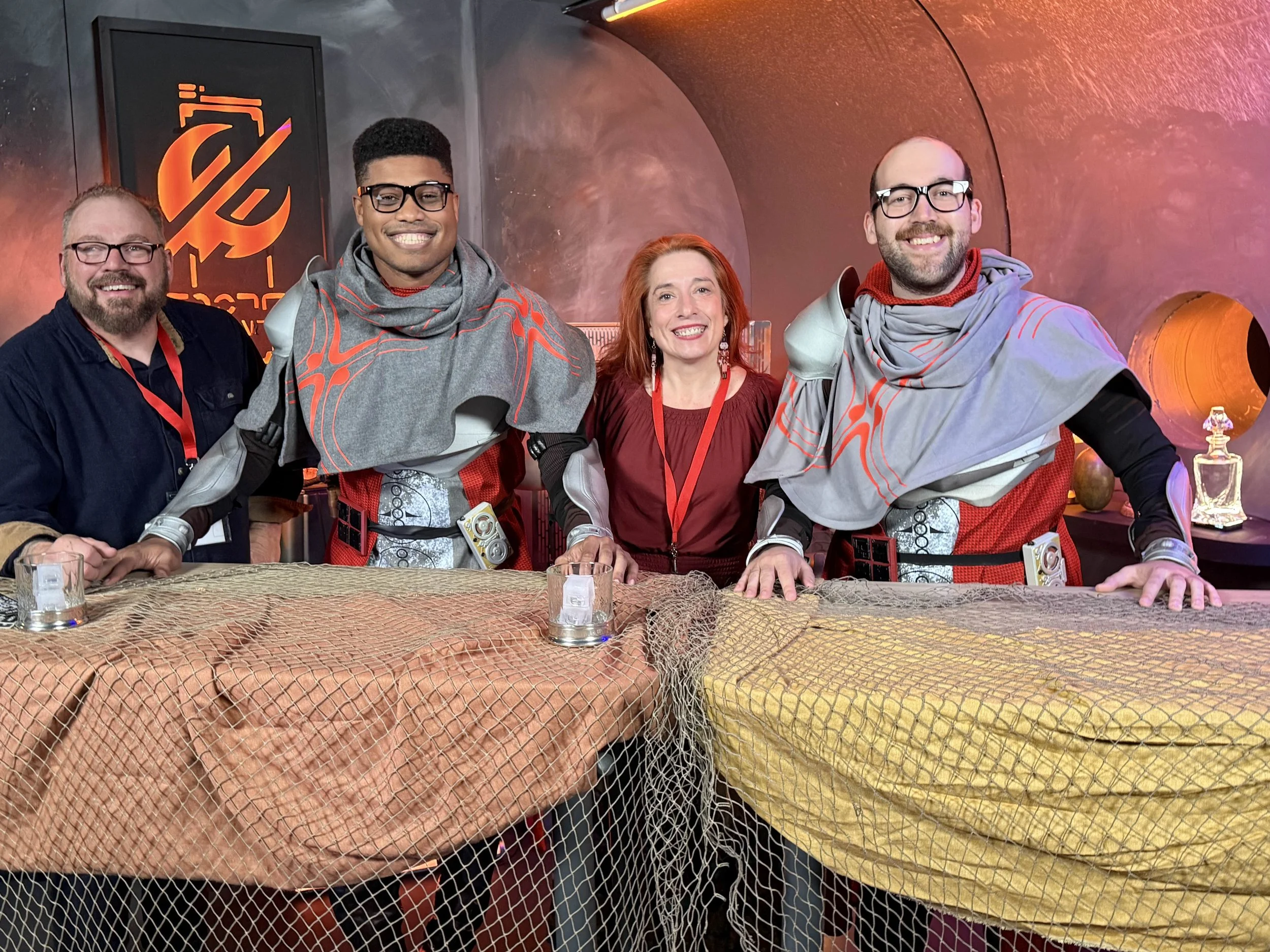
Wearability is where story meets consequence.
It’s where structure, softness, and motion have to work together instead of competing. Where the design has to respect the body inside it. Where a character proves they can exist not just as an image, but as a presence.
Wearability as Storytelling
This is also where partnership matters — not as a division of labor, but as a shared rhythm.
We’ve been creating worlds together for years. Sometimes that looks like me designing the structure — sets, props, armor, digital elements — thinking in systems, transitions, how something holds together and moves through space. Sometimes it looks like Katie shaping the body of it — garments, textures, set dressing, the details that give a world its lived-in truth.
And often, it doesn’t look like anything you could easily label.
There are moments where we don’t talk at all. Where the work moves between us without explanation. One of us adjusts a line. The other responds with structure. Something gets lighter. Something settles. The world starts to cohere.
We push each other. We complement each other. We notice what the other misses. And over time, that creates a kind of flow — not because we planned it, but because we trust it.
Creating in Flow
LODI needed that kind of partnership.
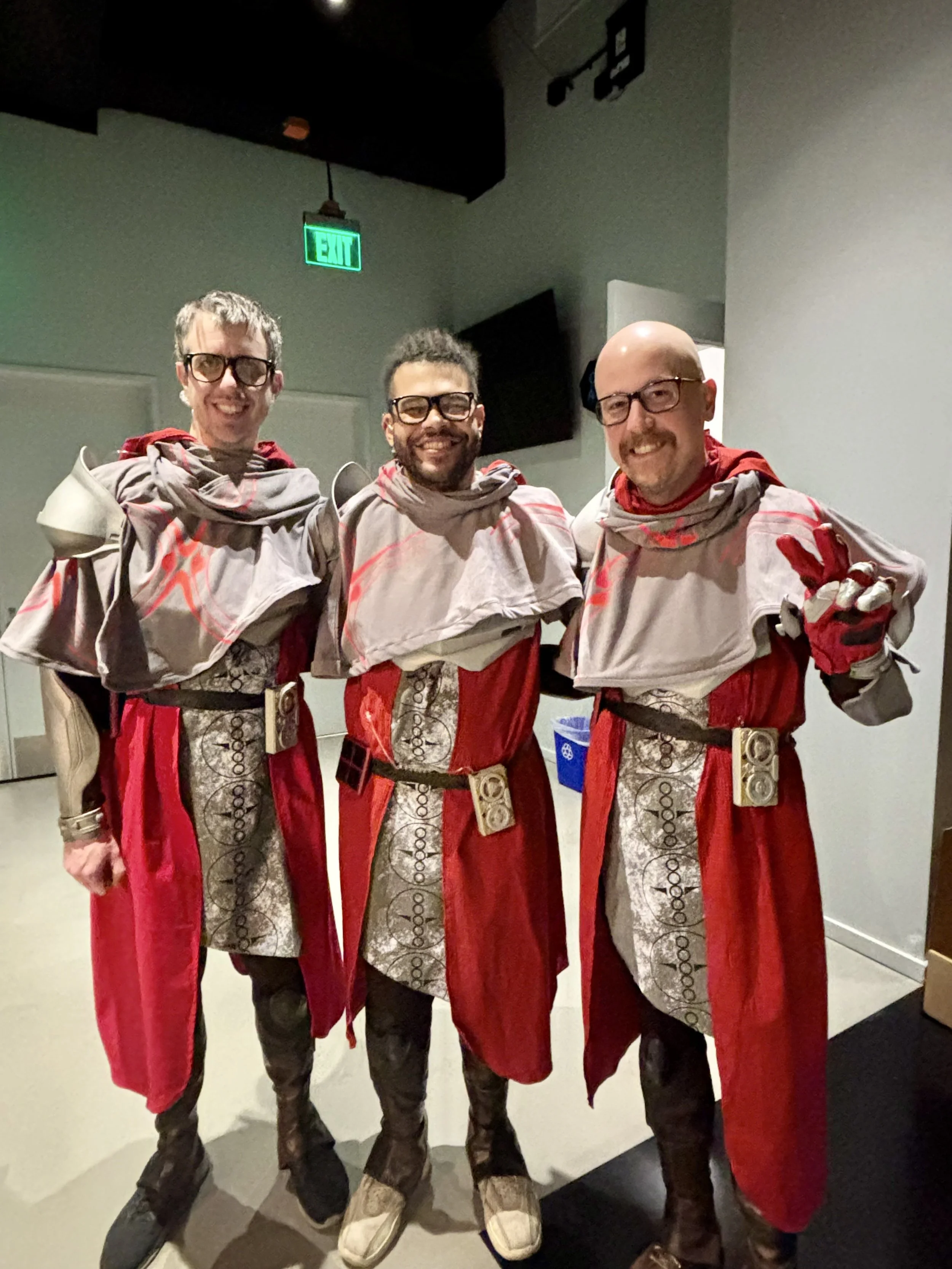
Because a character shaped by a world as intentional as Destiny’s can’t be solved in isolation. They have to be felt into being. They have to carry themselves in a way that makes sense — not just visually, but physically — and that only happens when structure and softness are listening to each other instead of competing.
When a Story Gains a Body
This is why we care so deeply about making things wearable.
Not because comfort is a luxury — but because embodiment is the point.
There’s a moment we always watch for: when someone stops adjusting a piece, stops thinking about how it sits or where it pulls, and simply stands differently. When the character stops being presented and starts being carried.
That’s when the world that once existed only on a screen steps fully into ours.
And that’s why projects like LODI matter to us.
Not because they’re impressive.
But because they remind us that when a story is built with care — and met with the same care in return — it doesn’t lose anything in the translation.
It gains weight.
It gains breath.
It gains a body.